Roof Hail Damage Insurance Claims: What MN Homeowners Get Wrong
⚠️ Before you read any further: Everything below is drawn from our experience walking hundreds of hail claims alongside Twin Cities homeowners. It is not insurance advice, and it is not legal advice. For anything specific to your policy, your carrier, or your claim, talk to your licensed insurance agent. They have the contract language and they know your coverage. We're sharing what we've seen happen on job sites so you walk into that conversation better prepared.
Every time there's a hail event in the Twin Cities, I get the same three phone calls over the next few weeks.
The first call is from somebody who had damage, didn't know they could file, and now they're three years past the deadline. They're stuck paying for the roof themselves.
The second call is from somebody who filed, got a check, and doesn't understand why it was so much smaller than their contractor's bid. They think the carrier shorted them. Usually they didn't get shorted — they just didn't understand how their policy works.
The third call is from somebody mid-claim who doesn't know what "depreciation," "ACV," "RCV," or "matching" means, and they're trying to decide whether to sign a release their carrier sent over.
This post is for all three of those people. I'm going to walk through the five things homeowners most commonly get wrong about Minnesota hail insurance claims, why each one matters, and what to do differently next time.
I'm Joe Dvorak. I run Modern Exterior Systems out of Eden Prairie. I'm not a lawyer or a licensed insurance agent, and nothing here substitutes for either of those professionals. What I can tell you is what hundreds of hail claims have looked like from the contractor side of the table.
Mistake 1: Waiting too long to file
This is the single biggest one.
Minnesota has a statute of limitations on insurance claims, and most homeowners policies also have their own internal reporting windows that run shorter than the statute. If you miss either one, you're out — it doesn't matter how real the damage is.
I've had homeowners walk me around a clearly hail-damaged roof and then tell me the storm was in 2022. By the time they noticed the leak, they were already past the point where any carrier would accept the claim. That roof becomes a cash purchase. $15,000 to $40,000 out of pocket on damage that would have been covered 90 days earlier.
What to do instead: if you think you had a hail event, get an inspection within two weeks. Not six months. Not "when it's convenient." Within two weeks. A free inspection costs you nothing, and it either puts you on a timeline to file or clears the question entirely.
If you're reading this and you're already past the two-week mark, still get the inspection. Depending on the policy and the storm documentation, you may still be within your carrier's reporting window. But don't assume.
In our experience , the homeowners who end up happy with their claims are the ones who moved quickly and got professional documentation before the weather did any more damage. The homeowners who end up frustrated are the ones who waited.
For anything specific to your reporting deadlines, call your licensed insurance agent. They have your policy in front of them.
Mistake 2: Filing the claim before getting a professional inspection
I see this constantly. A storm hits, the homeowner gets nervous, they call their carrier and report a claim before anyone's actually looked at the roof. The carrier sends an adjuster. The adjuster walks the roof, doesn't find enough damage to justify a replacement, and closes the claim.
Now there's a filed-and-closed hail claim on the homeowner's record — which affects their future premiums and sometimes makes it harder to get the next claim accepted — and they still don't know whether they actually had damage.
What to do instead: contractor inspection first, claim second.
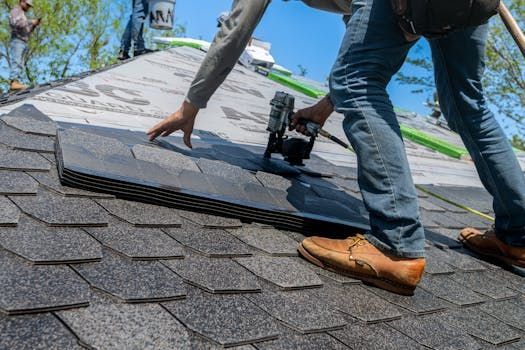
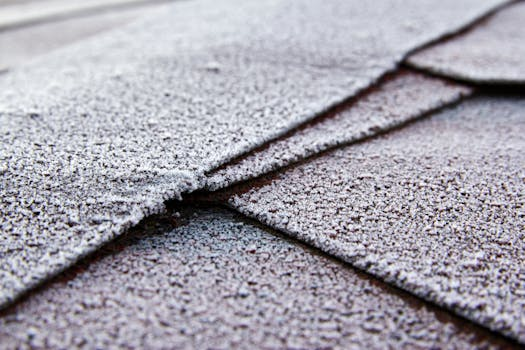
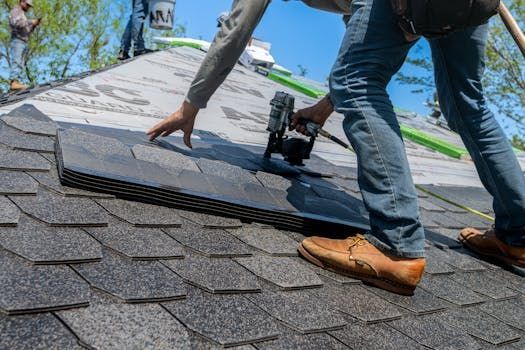
When we do a free inspection, we're looking at exactly the same indicators the carrier's adjuster would look at: bruised and fractured shingles, exposed mat, granule displacement, dented soft metals, and collateral damage to siding, windows, and gutters. If we find enough damage that we'd support a claim, we tell you. If we don't, we tell you that too, and you save yourself a filed-and-closed claim on your record.
If we do support a claim, we can be on site when the adjuster comes out, point out what we found, and make sure nothing gets missed. Adjusters are overworked and inspecting dozens of roofs a week. Having a contractor walking the roof with them tends to result in more thorough findings. That's just how it goes.
Whether and when to file with your carrier is a decision only you and your licensed insurance agent should make. We're describing what we've seen work — not telling you what to do on your specific policy.
Mistake 3: Not understanding ACV vs. RCV
This is the one that causes the most sticker shock when the check arrives.
Most homeowners policies in Minnesota are written on an RCV (Replacement Cost Value) basis, meaning the policy covers what it actually costs to replace the damaged property with like-kind materials at current prices. Some policies — usually cheaper ones, or policies written on older homes — are on an ACV (Actual Cash Value) basis, which pays the depreciated value of the roof at the time of the claim, not the replacement cost.
Here's why this matters. Say you have a 15-year-old asphalt roof that originally cost $14,000 and would cost $22,000 to replace today in Eden Prairie.
On an ACV policy , the carrier calculates depreciation on the old roof based on its age and expected lifespan, then pays you that depreciated value. Maybe $6,000 to $8,000. You pay the rest of the $22,000 yourself.
On an RCV policy , you typically get two checks. The first check is the ACV amount (roof's depreciated value, minus your deductible). You get the second check — the "depreciation recovery" check — after the work is actually completed and the contractor has submitted the final invoice to the carrier. The two checks together cover the full replacement cost, minus your deductible.
A lot of homeowners open the first envelope, see the ACV number, panic, and think they've been shorted. They haven't — they just haven't gotten the second check yet.
What to do instead:
- Before you file, know whether your policy is ACV or RCV. It's on your declarations page. If you can't tell, call your agent.
- If it's an RCV policy, understand you'll get two checks and the second one comes after the work is done.
- Don't sign anything that waives your right to the depreciation recovery check. Some release forms try to do this.
For anything about what's in your specific policy, call your licensed insurance agent. They can read you the relevant sections in plain English.
Mistake 4: Accepting a "matching exception" when Minnesota's matching statute may apply
Minnesota has a matching regulation that requires insurers, in certain circumstances, to cover the cost of replacing undamaged materials when those undamaged materials are part of a continuous visual run and can't reasonably be matched to new materials after a partial repair.
In plain English: if hail damages one slope of your roof and the shingle on that slope is no longer manufactured — or has weathered to a color that new shingles won't match — the matching regulation may require the carrier to cover the full roof replacement, not just the damaged slope.
Same idea with siding. If hail dents one side of your LP SmartSide or James Hardie siding and the carrier wants to repair only that side, but the siding on the other three sides can't be reasonably matched, the regulation may apply.
Here's what I see happen. The adjuster comes out, identifies damage to one slope or one side, and writes up a partial repair. The homeowner doesn't know the matching regulation exists, signs the estimate, and ends up with a roof or siding job that looks patched. Six months later, they're upset. By then, the claim is closed and they're out of options.
What to do instead: if your carrier is offering a partial repair, before you sign, ask your agent and/or an attorney familiar with Minnesota insurance law whether the matching regulation applies to your situation. A good contractor will also raise this on the inspection — we do, on every job where it's relevant.
I'm not a lawyer. The matching regulation has exceptions, nuance, and case-specific application, and whether it applies to your claim is something only a licensed professional can tell you. But homeowners who don't know the regulation exists can't even ask the question, and that's what I want to fix.
For any specific application of the matching regulation to your claim, consult your licensed insurance agent or an attorney.
Mistake 5: Hiring the contractor who knocked on the door
After a big hail storm, out-of-state "storm chaser" contractors flood the Twin Cities. They knock on doors, offer to "handle the whole claim" for you, sometimes promise to waive your deductible (which is insurance fraud and a direct violation of Minnesota Statute 325E.66 ), and disappear the following year.
A year later, when the roof leaks, the homeowner tries to call the workmanship warranty phone number on the contract and discovers the number is disconnected. The company is gone.
What to do instead: hire a contractor who has a physical address in Minnesota, a Minnesota Department of Labor and Industry license number, general liability and workers comp insurance you can verify, manufacturer certifications from the brand they're installing, a written workmanship warranty you can read before signing, and a track record you can verify in reviews and photos going back several years.
For the record, we are:
- CertainTeed ShingleMaster
- Malarkey Emerald Premier Contractor
- Atlas Pro+ Silver Select
- LP SmartSide Preferred Contractor
- James Hardie Preferred Contractor
- EDCO-certified
- BBB A+ rated
- NRCA member
- Minnesota licensed (BC762305)
- Family-owned, women-owned, headquartered in Eden Prairie
- Lifetime workmanship warranty in writing on every job
You can hire us or you can hire somebody else. Just hire somebody who'll still be here in ten years.
What a Minnesota contractor can and can't legally do in your claim
Minnesota is one of the strictest states in the country when it comes to contractors and insurance claims — and honestly, that's a good thing for homeowners. Minnesota Statute 325E.66 draws clear lines around what residential roofing contractors can and cannot do when a hail or storm claim is in play. Here's the short version, so you know what to expect from us — and what to be skeptical of if another contractor offers it.
What a Minnesota contractor can do:
- Inspect your roof and document damage with photos, drone scans, and measurements
- Walk the roof alongside your insurance adjuster during their inspection
- Provide a detailed written estimate to you and, with your permission, to your insurer
- Explain industry pricing and scope language in plain English
- Rebuild your roof or siding once your claim has been approved, scoped, and you've signed a contract
What a Minnesota contractor cannot do under MN Statute 325E.66:
- Negotiate or adjust your claim with your insurance company on your behalf — that's a licensed public adjuster's job, and contractors are not allowed to act as one
- Pay, waive, rebate, or absorb any portion of your deductible
- Advertise or imply that "insurance will cover everything" or there's "no out-of-pocket cost"
- Act as your representative in any dealings with your carrier
- Sign or accept any document that assigns your insurance benefits to the contractor before the inspection has been performed
If a contractor tells you they'll "handle your whole claim," "cover your deductible," or "make sure insurance pays for everything," that's a Minnesota law violation in real time — and you can get pulled into the violation as the homeowner. Walk away. Then call us, or call any reputable local contractor, and we'll tell you the truth even when it's less fun to hear.
Every policy, adjuster, and damage event is different. Nothing in this article guarantees a specific claim outcome — your results depend on your coverage, your deductible, the severity of the damage, and your insurer's scoping decisions.
A note on deductibles
Minnesota hail deductibles come in two flavors: a flat dollar amount (say, $1,000) or a percentage of your dwelling coverage (often 1%, sometimes 2%, occasionally more). On a home insured for $500,000, a 1% hail deductible is $5,000 — significantly more than most homeowners realize until the first claim.
Check your deductible before you need it. If it's a percentage-of-dwelling deductible, understand what that number actually comes out to. Some homeowners look at their declarations page, see "1%" in the hail deductible line, and don't mentally translate it into dollars.
This matters because it affects whether a claim is worth filing. If your deductible is $5,000 and the damage is $6,500, the claim nets you $1,500 — and it goes on your record, potentially affecting future premiums and insurability. That's a very different calculation than a $1,000 deductible on the same damage.
Whether a specific claim is worth filing given your deductible and premium trajectory is a conversation for your licensed insurance agent, not a blog post.
The right order of operations
If you think you may have hail damage, here's the sequence that has worked best in our experience:
- Document the date of the storm. Save news articles, NOAA storm reports, or photos of hailstones if you took them. You'll need this if the claim gets questioned.
- Book a professional inspection within two weeks. Free, no-obligation, written report with photos.
- If damage is real, call your licensed insurance agent and have a real conversation about whether to file. Share the contractor's written inspection findings.
- If you file, have your contractor present when the adjuster inspects. Two sets of eyes on the roof, and the contractor can speak the carrier's language.
- Before signing any estimate or release, read it carefully. Ask your agent to explain anything you don't understand. Ask about the matching regulation if the estimate is a partial repair.
- Once the work is approved and complete, make sure the depreciation recovery check gets released. Your contractor submits the final invoice; the carrier issues the second check.
That process takes effort, but it's the difference between a homeowner who ends up happy with their claim and a homeowner who ends up in my phone call list six months later asking why they're out $12,000.
Want a no-cost roof inspection?
If you want to know whether you have legitimate hail damage on your Eden Prairie, Minnetonka, Chanhassen, Edina, Bloomington, or Minneapolis-metro home, we'll come look. Call 952-206-6339 or request an inspection at modernexteriorsystems.com/contact . We'll walk the roof, drone-scan it, and give you a written report the same day.
The inspection is no-cost and is separate from any insurance claim — we're not asking you to file, we're just telling you what we see on the roof. Whether to file a claim afterward is a decision for you and your licensed insurance agent, full stop. We'll never pressure you either way, and under Minnesota law, we couldn't negotiate that decision with your carrier even if you asked us to.
And please — call your licensed insurance agent before you make any specific decision about your policy. That part is on them, not on me.
Frequently asked questions
How long do I have to file a hail insurance claim in Minnesota?
Minnesota's statute of limitations sets an outer boundary, and your specific carrier's policy will usually have a shorter internal reporting window. The safe practice is to file within weeks of the storm, not months. For specific deadlines on your policy, call your licensed insurance agent.
What is the difference between ACV and RCV in a homeowners policy?
ACV (Actual Cash Value) pays the depreciated value of the damaged property. RCV (Replacement Cost Value) pays what it actually costs to replace the property today, usually in two checks: an initial ACV check and a depreciation recovery check issued after the work is completed. Most modern Minnesota homeowners policies are RCV, but not all — check your declarations page.
Does Minnesota have a matching statute for insurance claims?
Minnesota has a regulation addressing matching of undamaged materials in certain partial-loss situations. Whether the regulation applies to your specific claim depends on the facts, the policy language, and how the damage presents. Consult your licensed insurance agent or an attorney familiar with Minnesota insurance law.
Will filing a hail claim raise my homeowners insurance premium?
Sometimes. Carriers weigh claim history when setting renewal rates, and multiple claims over a short period can cause premium increases or non-renewal. A single legitimate claim on a previously clean record typically has less impact than homeowners fear. Your agent can give you a carrier-specific answer.
Can a contractor waive my insurance deductible?
No. Minnesota Statute 325E.66
specifically prohibits residential roofing contractors from paying, waiving, rebating, or offering to pay or rebate any portion of an insurance deductible on a property insurance claim. Any contractor offering to do this in Minnesota is asking you to participate in insurance fraud — illegal for both of you. Walk away from any contractor who makes this offer, and consider reporting them to the Minnesota Department of Labor and Industry.
Is the adjuster's inspection the final word on my claim?
Not necessarily. If you disagree with the adjuster's findings, you typically have the right to request a re-inspection, bring in a second contractor for documentation, or (in some cases) invoke the appraisal clause of your policy. The specific process depends on your carrier and policy. Your licensed insurance agent can walk you through your options.
Do you handle the claim for me?
No — handling an insurance claim on a homeowner's behalf without being a licensed public adjuster is not something a contractor can legally do in Minnesota. What we can
do is provide professional inspection documentation, be present when your adjuster walks the roof, explain what we find in plain English, and provide a detailed written estimate that matches industry standards. The claim itself is between you and your carrier.
Modern Exterior Systems is a CertainTeed ShingleMaster, Malarkey Emerald Premier Contractor, Atlas Pro+ Silver Select, LP SmartSide Preferred Contractor, James Hardie Preferred Contractor, EDCO, BBB A+ rated, NRCA member, and Minnesota-licensed under BC762305. Family-owned, women-owned, headquartered in Eden Prairie. Lifetime workmanship warranty in writing on every project.
This article is not insurance advice, legal advice, or a substitute for a licensed professional. For specific guidance on your policy, your claim, or your legal rights under Minnesota insurance law, please consult your licensed insurance agent and, where appropriate, a Minnesota-licensed attorney.