First 48 Hours After a Hailstorm: Twin Cities Playbook
⚠️ A note before we start: Everything below is based on what we've seen work on real jobs with Twin Cities homeowners after real hailstorms. It is not insurance advice. For anything specific to your policy, your coverage, your deductible, or your claim, call your licensed insurance agent — that's their job, and they're the right person to advise you. This post is about what happens on the ground in the first 48 hours, not what you should tell your carrier.
A hailstorm rolls through Eden Prairie at 5:17 p.m. By 5:22 it's over. Twenty minutes later you're standing in your driveway looking at dented gutters, a dinged car hood, and leaves shredded off your trees, and you have no idea what to do next.
I've walked homeowners through this situation more times than I can count. The ones who end up happy with how it all resolves have something in common: they move quickly and methodically in the first 48 hours. The ones who end up frustrated — overpaying, stuck in claim limbo, hiring the wrong contractor — are usually the ones who either froze or got sloppy in those first two days.
So here's the playbook. Hour by hour. What to do, what to document, what to not do, and who to call.
I'm Joe Dvorak. I run Modern Exterior Systems in Eden Prairie. We do free hail inspections across the southwest metro. What follows is the process I'd want a family member to follow if a storm hit their house tomorrow.
T + 0 to T + 1 hour: Right after the storm passes
Step 1: Don't go up on the roof.
I cannot say this loudly enough. A roof that just got hit with hail is dangerous. The shingles are shifting. The surface might be wet. Loose granules turn the whole thing into a slide. Your adrenaline is up, you're not thinking clearly, and one bad step ends a conversation about insurance claims and starts a conversation about emergency rooms. Stay on the ground.
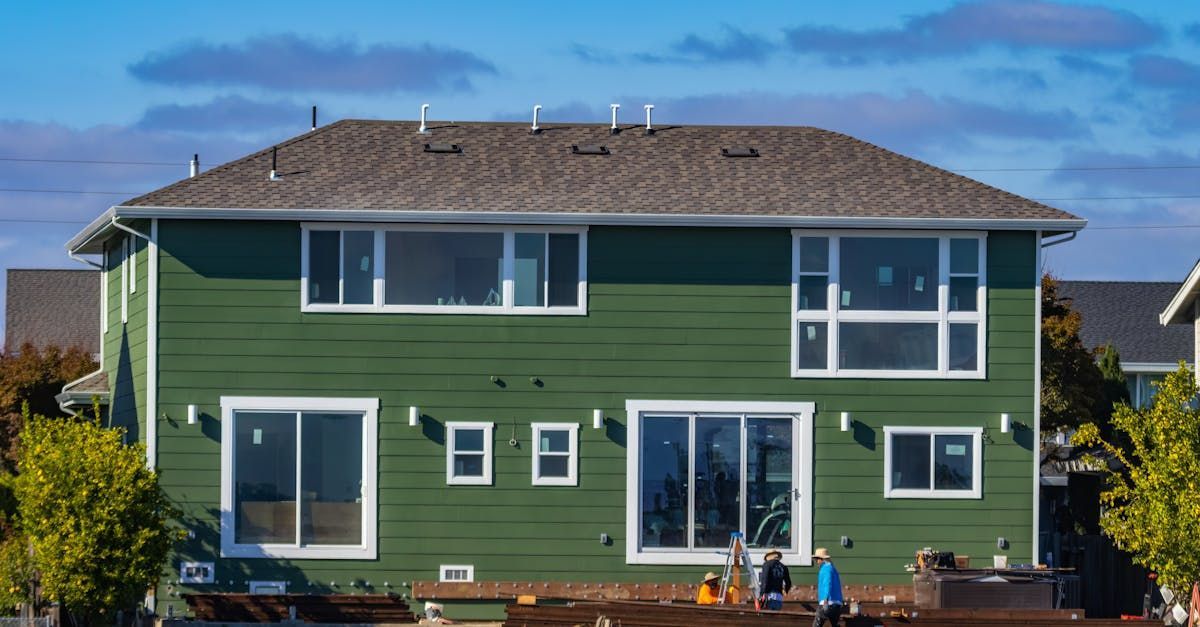
Step 2: Walk the perimeter of the house with your phone.
Take photos of everything. Not just the roof — everything.
- All four sides of the house, from the ground, wide shots
- Every gutter, up close, especially if you see dents or granule accumulation
- Every window screen and frame
- Every piece of exposed metal: AC condenser, dryer vent, radon vent, downspouts
- Siding on all four sides
- Any broken or pocked skylights visible from the ground
- Your car, if it was parked outside
- Outdoor furniture, grills, trampolines, anything else hail might have hit
- Hailstones on the ground, especially next to a coin or a ruler for scale
Time-stamped photos are gold later. Modern phones embed GPS and timestamps in the metadata automatically, so just shoot, don't worry about apps. If you have a tape measure handy, photograph a hailstone next to the tape showing its diameter. Half-inch hail and two-inch hail are different insurance stories.
Step 3: Check inside the house for active leaks.
Walk every room. Look at ceilings. Check attic access if you have one and it's safe — look for water staining on the decking underside or fresh drips. If water is actively coming in, move valuables and set up containers, and we'll talk about emergency tarping in the next hour-block.
T + 1 to T + 6 hours: Get documentation locked down
Step 4: Save storm documentation from outside sources.
You're documenting your house and the fact that a hail event actually occurred over your zip code. Don't skip the second part — some carriers later question whether a storm was severe enough to cause the damage you're claiming.
- Screenshot the local weather report for that day
- Pull the NOAA Storm Prediction Center storm report for your area (free, public)
- Save any news article mentioning the storm, your city, and hail size
- If your neighbors posted photos on Nextdoor or Facebook, screenshot those with timestamps
Step 5: If there's an active interior leak, tarp or call for emergency tarping.
This one is about preventing more damage, not fixing the hail damage. Insurance typically requires homeowners to take "reasonable steps to prevent further loss" — if you know water is coming in and you do nothing, the carrier can argue some of the resulting damage is on you.
If the leak is small and you're comfortable with a ladder and a tarp, tarp it. If it's bigger, or if tarping requires you on the roof, call a contractor for an emergency tarp. Most reputable Twin Cities roofers offer this. We do. It's not free, but it's cheap compared to a ruined ceiling.
Save every receipt for anything you pay for emergency mitigation. Your carrier may reimburse these costs as part of the claim.
Step 6: Do NOT call your insurance carrier yet.
I know this is counterintuitive. Your instinct is to call and report the damage while it's fresh. Please wait. Here's why.
A claim filed before anyone's physically inspected the roof often results in one of two bad outcomes:
- The carrier sends an adjuster who can't find enough damage and closes the claim — now there's a filed-and-closed hail claim on your record, which affects your future premiums and insurability even though you didn't actually get paid.
- The carrier sends an adjuster who finds damage but writes a minimal estimate that doesn't account for everything. You accept it, sign a release, and later discover the number doesn't cover the real repair.
Get the inspection first. File second. That sequence protects you.
For questions about whether and when to file a claim on your specific policy, call your licensed insurance agent — not your contractor, not a blog post. They know your policy terms.
T + 6 to T + 24 hours: Schedule the inspection
Step 7: Call two or three reputable local contractors for free inspections.
Notice the word local . Within a day or two of a significant hail event, the Twin Cities get flooded with out-of-state storm chasers knocking doors. Don't hire them. Don't even schedule inspections with them. A contractor who lives an eight-hour drive from your house will not be here when you need warranty service in year four.
What a reputable local contractor looks like:
- Physical address in Minnesota (preferably in or near your metro area)
- Minnesota Department of Labor and Industry license number (ours is BC762305)
- Manufacturer certifications (CertainTeed ShingleMaster, Malarkey Emerald, Atlas Pro+, LP SmartSide, James Hardie, etc.)
- Years of Google reviews from Minnesota customers
- Written workmanship warranty you can see before signing anything
- General liability AND workers comp insurance certificates available on request
Schedule two or three inspections for different days. Yes, three. You want multiple sets of eyes on the roof before filing a claim, and if two of the three contractors agree the damage is real, you have solid documentation.
Step 8: In the meantime, do NOT sign anything.
Storm chasers will try to get you to sign a "contingency agreement" or an "assignment of benefits" at the inspection. These documents can assign your insurance proceeds directly to the contractor, with penalty clauses if you try to cancel. Some of them lock you into a contractor you've known for twenty minutes, for a claim that may or may not even get approved.
Reputable contractors don't need you to sign anything at the inspection. We don't. An inspection is a free look at your roof, we give you a written report, and you decide what to do next with zero obligation to us. Any contractor pressuring you to sign on the spot is someone you should show to the door.
T + 24 to T + 48 hours: Make decisions with real information
Step 9: Review inspection findings.
By this point, you should have at least one (ideally two or three) written inspection reports with photos. Read them. Compare them. If the reports disagree on the extent of damage, ask questions until you understand why.
A good inspection report tells you:
- Whether there's actionable hail damage (and if so, where on the roof)
- Whether collateral damage exists on siding, windows, gutters, or soft metals
- Photo evidence of every item noted
- Approximate scope of repair or replacement needed
- The contractor's recommended next step
If the reports say "no damage," great — call your carrier, tell them you thought you might have had damage but the inspection cleared it, and move on with your life. Don't file a claim.
If the reports say damage is real, you now have a decision to make.
Step 10: Call your licensed insurance agent.
This is the call I want you to make at hour 36 or so, not hour 2. Now you have information. Now you can have a substantive conversation.
Share what the contractor found. Ask your agent:
- Is this the kind of damage my policy covers?
- What's my deductible, and what does it actually come out to in dollars?
- Is my policy ACV or RCV?
- Will filing affect my premium or my renewal?
- What's the reporting window on my policy?
- Given what the contractor documented, does filing make sense?
Your agent should walk you through all of this. If they can't or won't, that's a red flag about the agent, not about the claim.
I'm not a licensed insurance agent. These are the questions we've seen homeowners benefit from asking. The answers depend entirely on your policy, and only your agent can give them to you.
Step 11: If you file, schedule the adjuster inspection — and have your contractor present.
The adjuster will call to set a time to walk the roof. When you schedule, ask if your contractor can be present. They almost always say yes.
Having a contractor on the roof with the adjuster matters because:
- The adjuster is inspecting dozens of roofs a week and can miss things
- The contractor knows what to point out and how to speak the adjuster's technical language
- Any disputes about scope get resolved in real time, not in a follow-up email three weeks later
Our standard practice is to be on site for every adjuster inspection we can. We bring our documentation, we walk the roof with the adjuster, and we advocate for the homeowner on the scope questions. We don't argue with adjusters — we just make sure nothing gets missed.
Step 12: Don't sign anything the carrier sends until you understand it.
At some point, the carrier will send you an estimate, a scope of loss, and possibly a release or waiver. Read every page. If anything is unclear, ask your agent to explain it. In some cases it may be worth having a Minnesota-licensed attorney review it, particularly if the carrier is proposing a partial repair on what you believe should be a full replacement, or if there's any language about assignment or release of future claims.
Specifically, watch for:
- Any language waiving your right to the depreciation recovery check (if you're on an RCV policy)
- Any language releasing the carrier from additional claims related to this storm
- Any proposed partial repair that ignores the Minnesota matching regulation (where applicable)
Whether any of this applies to your specific situation is something only your licensed insurance agent or a qualified attorney can advise on. We're just telling you what we've seen other homeowners regret signing.
What you accomplished in 48 hours
If you followed the playbook above, by the end of day two you have:
- Thorough photographic documentation of every damaged surface, time-stamped
- Independent storm verification from outside sources
- Two or three written contractor inspection reports with photo evidence
- A substantive conversation with your licensed insurance agent based on real information
- A decision to file or not file, made with your eyes open
- (If filing) a scheduled adjuster inspection with your contractor committed to be present
Compare that to the homeowner who called the carrier at hour two, accepted whatever the first adjuster said, signed whatever was put in front of them, and hired the first contractor who knocked on the door. Same storm, same damage, very different outcome.
The one thing to remember
If you remember nothing else from this post, remember this: move quickly, but don't move recklessly. The first 48 hours matter because documentation and inspection windows are time-sensitive. But rushing to file a claim before anyone has actually looked at the roof, or rushing to hire a contractor who happens to be standing on your doorstep, creates problems that take months to unwind.
Fast and methodical. Not fast and sloppy.
Want us to walk it with you?
If a storm just hit the southwest metro and you need a free inspection — call 952-206-6339 or request one at modernexteriorsystems.com/contact. We serve Eden Prairie, Minnetonka, Chanhassen, Edina, Bloomington, Minneapolis, and the surrounding communities. Free, no-obligation, written report the same day, and we'll be on site when the adjuster comes if the damage is real.
And: please call your licensed insurance agent before making any specific claim decision on your policy. That part is important, and they're the right person for it.
Frequently asked questions
What's the first thing I should do after a hailstorm?
Stay off the roof and photograph everything from the ground — the roof, gutters, siding, windows, AC unit, outdoor items, and any hailstones (with a ruler or coin for scale). Then check inside the house for active leaks. Documentation is the most important thing you can do in the first hour.
Should I call my insurance company immediately after a hailstorm?
In our experience, it's usually better to get a professional contractor inspection first and call your licensed insurance agent second. A claim filed before anyone has inspected the roof risks being closed with a "no damage" finding — which can still affect your premium and insurability going forward. That said, every policy is different; for a specific recommendation on your situation, call your licensed insurance agent.
How do I find a reputable contractor to inspect hail damage?
Stick with a local contractor who has a physical Minnesota address, a Minnesota DLI license, manufacturer certifications on the brands they install, a long history of local reviews, and a written workmanship warranty. Avoid out-of-state storm chasers who knock on doors after the storm.
Is it insurance fraud if a contractor offers to waive my deductible?
Yes, in Minnesota it's illegal and it's fraud that implicates both the contractor and the homeowner. Any contractor who offers this is someone to walk away from.
How long do I have to file a hail claim in Minnesota?
Minnesota has a statute of limitations, and your carrier's policy will usually have a shorter internal reporting window. The practical answer is: don't wait. Get an inspection within two weeks and file (if warranted) shortly after. For the exact deadline on your policy, call your licensed insurance agent.
Do I have to let the first contractor who inspects my roof do the repair?
No. A free inspection is just an inspection. Reputable contractors don't require you to commit to anything at the inspection, and you should never sign a contract — or an "assignment of benefits" — just to get a roof looked at.
What if the adjuster's estimate is lower than my contractor's bid?
This is common and usually resolvable. In our experience, having your contractor present at the adjuster inspection prevents most of these disputes. If a gap still exists after the inspection, the contractor can submit a supplemental estimate with documentation. For options beyond that (including your rights under the appraisal clause of your policy), consult your licensed insurance agent.
Modern Exterior Systems is a CertainTeed ShingleMaster, Malarkey Emerald Premier Contractor, Atlas Pro+ Silver Select, LP SmartSide Preferred Contractor, James Hardie Preferred Contractor, EDCO, BBB A+ rated, NRCA member, and Minnesota-licensed under BC762305. Family-owned, women-owned, headquartered in Eden Prairie. Lifetime workmanship warranty in writing on every project.
This post is not insurance advice or legal advice. For specific guidance on your policy, your deductible, or your claim rights, please consult your licensed insurance agent or a Minnesota-licensed attorney.