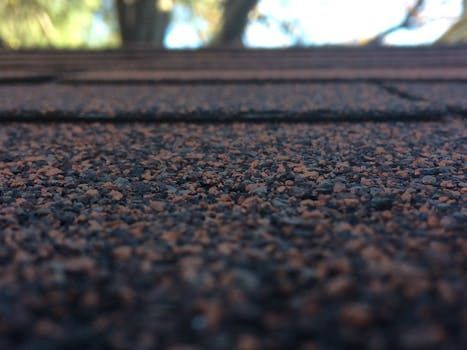
What Hail Damage Looks Like on a MN Roof (Photo Guide)
Quick answer: Real hail damage on an asphalt shingle roof shows up as round, dark bruises where the granules have been knocked loose, as sharp fractures in the mat, and as heavy granule accumulation in gutters and downspouts. Cosmetic marks from tree branches, foot traffic, and factory blemishes often get mistaken for hail. Below, I'll walk through what to look for, what to ignore, and how to tell the difference — from Eden Prairie, Minnetonka, Chanhassen, and Edina jobs.
Every spring and summer, I get calls that start the same way: "Joe, we had a storm last night, can you come look at my roof?" Half the time there's clear damage. The other half, the homeowner is looking at a scuff from a tree branch or a scratch from a squirrel and thinking the worst. Both situations deserve a real answer.
This post is a visual reference — what actual hail damage looks like on a Minnesota roof, broken down by severity and shingle type. If you think your roof might have hail damage, work through this page and then either schedule a free inspection or, at minimum, know what to point at when you call.
I'm Joe Dvorak. I own Modern Exterior Systems out of Eden Prairie. I'm a CertainTeed ShingleMaster and a Malarkey Emerald Premier Contractor, which means I've walked a lot of hail-damaged roofs. Let's get into it.
The six things hail does to an asphalt shingle
Asphalt shingles have three layers that matter for this conversation: a protective granule surface, a fiberglass or organic mat underneath, and an asphalt binder holding it together. Hail damages those three layers in characteristic ways. Here's what you're actually looking for.
1. Granule loss with a visible bruise
This is the most common type of legitimate hail damage and the one insurance adjusters are trained to look for. A hailstone impacts the shingle hard enough to knock the protective granules loose, exposing the dark asphalt mat underneath. The result is a circular or slightly oval dark spot, usually somewhere between a dime and a quarter in size.
The important word is bruise. It's not just granule loss — it's granule loss in a specific pattern with a visible indentation. If you run your hand over a real hail hit, you can often feel that the spot is slightly soft or depressed compared to the undamaged shingle around it. That softness is the asphalt mat compressed by the impact, and it's what makes the shingle fail over the next few years even if the surface looks stable today.
Not to be confused with: factory granule variation (where a shingle came off the production line with uneven granule distribution) or blister marks (little bubbles in the asphalt that pop and leave pockmarks). Both are cosmetic and not hail-related.
2. Fractured mat
Harder hail (think 1.25 inch and up) doesn't just bruise the shingle — it cracks the mat. You'll see the dark circular bruise plus a visible fracture line extending out from the impact point. Sometimes the crack is short. Sometimes it runs the full width of the shingle.
A fractured mat is serious. The shingle has lost structural integrity at that point and will almost certainly leak within one to three years if left alone. This is an automatic "replace" in my book, and insurance adjusters treat it the same way.
3. Exposed mat
A step worse than a bruise. This is where the impact was forceful enough to strip the granules off completely and expose the underlying mat to UV light. Once the mat is exposed, the asphalt binder degrades fast in Minnesota's sun cycles, and the shingle starts shedding material from that spot outward.
You can spot exposed-mat damage from the ground if you know what you're looking for — it shows up as light-colored dots on a dark roof or dark dots on a light roof, depending on the shingle color. I usually notice it first through the drone.
4. Heavy granule loss in gutters and downspouts
This one isn't on the roof itself — it's what ends up in the gutters. After a real hailstorm, the downspouts dump a significant amount of granules into the gutter runs. If you're seeing a thick layer of granules in your gutters that wasn't there before, it's a strong signal.
That said, some granule loss is normal for any asphalt roof, especially in the first year after installation (factory excess coming off). The key is whether it's new, whether it coincides with a specific storm, and whether it's accompanied by any of the shingle-surface indicators above.
5. Collateral damage on soft metals
This is often the clearest evidence hail hit your house, even if the shingles don't obviously show it. Aluminum gutter aprons, downspouts, roof vents, turbine vents, AC condenser fins, flashing, and siding accents all take visible dents from hail. The dents are round, they're in random locations (not a concentrated line), and they match each other in size because they were made by hailstones of similar dimensions during the same storm.
When I'm walking a roof and I'm not 100 percent sure the shingles are bruised, the first place I check is the metal vent caps and the gutters. If the metals are dented and the shingles look borderline, I know the hailstones were big enough that I need to look harder.
6. Damage to skylights, windows, and siding
Bigger hail cracks skylights, pocks window frames, dents vinyl siding, and tears holes in screens. If you're seeing any of that, the roof almost certainly took damage too. Don't just file a roof claim — document the collateral damage, because a comprehensive claim that covers roof plus siding plus windows plus gutters almost always gets treated differently than a roof-only claim.
What gets mistaken for hail damage (and isn't)
Not every mark on your shingle is hail. Here are the usual suspects I rule out on every inspection.
Foot traffic. Contractors and previous inspectors who walked the roof leave scuff marks and smear damage that can look like hail from a distance. Foot traffic tends to be in lines or along specific paths. Hail is random.
Tree branches. Branches scraping a roof in wind leave long parallel scratches, not round spots. Pretty easy to tell apart once you're up close.
Factory defects. Manufacturing flaws — bald spots where granules never adhered, blisters that popped — get called "hail damage" by overeager inspectors and sometimes by shady contractors trying to manufacture a claim. A good adjuster can usually tell the difference. So can I. The giveaway is that factory defects are consistent across the batch of shingles (same pattern on multiple shingles from the same bundle), whereas hail hits are scattered randomly.
Algae and lichen staining. Minnesota roofs pick up black or green streaks over time from algae, especially on the north face. This is cosmetic, not damage, and an algae-resistant shingle (CertainTeed Landmark with StreakFighter, Malarkey shingles with scotchgard) handles it.
Normal aging. Asphalt shingles shed granules over their lifespan. By year fifteen, a roof will look less pristine than it did on day one — that's aging, not hail.
Ice dam damage. Minnesota winters cause ice dams, and ice dams cause a completely different set of problems — lifted shingles, water infiltration at the eaves, damaged soffits. Not hail, and it needs a different repair approach.
How to check your roof safely without climbing on it
Don't get on your roof. I mean that. A wet or dusty roof is dangerous even for professionals, and your insurance isn't going to cover you if you fall. Here's what you can do from the ground.
Walk the perimeter of the house. Look at your gutters, downspouts, window frames, screens, siding, and any exposed soft metal. If you see round dents anywhere, hail hit your house.
Look in your gutters. If you have a ladder you're comfortable with and you can reach the gutter safely, check for fresh granule accumulation.
Use binoculars or a phone camera with zoom. You can often spot bruised shingles from the ground with a decent zoom. Look for round dark spots that weren't there before.
Check the AC condenser. The aluminum fins on your AC unit are really fragile and really good at showing hail damage. Bent fins after a storm = hail was big enough to damage your roof.
Don't get on the roof. Call somebody.
That last part is not a sales pitch. I'm happy to come out, but you can call any reputable contractor — just pick one with a local address, a Minnesota license, insurance, and manufacturer certifications. A professional inspection is free, takes maybe 30 minutes, and gives you a real answer.
When to file an insurance claim (and when not to)
This is the part where I have to add a disclaimer: I'm not your insurance agent, and the right answer for your policy is something you should talk to them about. In our experience working with Twin Cities homeowners after hailstorms, the decision to file usually comes down to three questions:
- Is the damage clearly above your deductible? (A single cosmetically scuffed vent cap isn't worth a claim. A bruised roof plus dented gutters plus cracked skylights absolutely is.)
- Is the damage recent enough that you're still within your carrier's reporting window? (Minnesota has a statute of limitations here, and carriers also have their own internal timelines. Don't sit on it.)
- Have you had a professional walk it first? (Don't file and then find out the damage isn't what you thought. File after you've been walked.)
What happens on our inspection
When we come out for a free hail inspection in Eden Prairie, Minnetonka, Chanhassen, Edina, or anywhere else in the southwest metro, here's how it goes:
- I walk the perimeter and check every soft metal — gutters, downspouts, window frames, AC unit, siding.
- I fly the drone over the roof and pull high-resolution imagery of every slope.
- If the drone footage shows possible damage, I get on the roof and do a physical inspection of representative test squares.
- I write up what I find with photos attached and send it to you the same day.
- If the damage is real and claim-worthy, I walk you through what to expect from your insurance carrier. If it isn't, I tell you that too.
Inspections are free, they're no-obligation, and we don't try to talk anybody into filing a fraudulent claim. If your roof is fine, I'll tell you. If it's not, you'll have real documentation and a real contractor who'll still be here in five years.
Ready to have somebody look?
Call 952-206-6339 or request an inspection at modernexteriorsystems.com/contact. If you just want a second opinion on a quote you already have from somebody else, that's fine too — send me the paperwork and I'll tell you what I see.
Frequently asked questions
What does hail damage actually look like on a roof?
Round dark spots where the granules have been knocked off, often with a visible bruise or fracture in the shingle mat, plus heavy granule accumulation in gutters and downspouts. On soft metals like gutter aprons, vent caps, and siding, hail leaves round dents. If you're seeing any of those together, you probably have a legitimate hail hit.
How big does hail have to be to damage a roof?
In the Twin Cities, marble-sized hail (around 0.75 inch) can cause cosmetic damage and occasional granule loss on older shingles. Quarter-sized hail (1 inch) starts causing real shingle bruising. Anything 1.25 inch and up regularly cracks shingle mats and dents metals. Impact-resistant Class 4 shingles (Malarkey Legacy, Malarkey Windsor IR) hold up significantly better than standard shingles at every size.
How soon after a hailstorm should I inspect my roof?
As soon as it's safe to do so — ideally within the first two weeks. Don't wait. Some forms of hail damage get worse quickly in Minnesota's freeze-thaw cycles, and insurance carriers have reporting windows that can get tight if you delay.
Can I spot hail damage myself without getting on the roof?
For soft metal damage and gutter granule accumulation, yes. For shingle bruising and mat fractures, a ground-level inspection with binoculars can give you a preliminary sense, but it's not a substitute for a professional inspection. Don't climb your roof.
Is cosmetic hail damage a valid insurance claim in Minnesota?
It depends on your policy. Some carriers exclude cosmetic-only damage; others cover it. Read your policy language or call your agent. In our experience, the cases where cosmetic-only damage becomes claim-worthy are when it's paired with functional damage elsewhere on the property (dented gutters, cracked skylights, damaged siding).
Do impact-resistant shingles eliminate hail damage?
Not eliminate — but significantly reduce. Class 4 impact-resistant shingles passed the UL 2218 steel-ball drop test and hold up noticeably better than standard architectural shingles in hail events. Most Minnesota insurers discount homeowners premiums for Class 4 roofs, which can offset a meaningful portion of the upgrade cost.
How do you tell hail damage from foot traffic damage?
Hail hits are random — scattered across the roof in no particular pattern. Foot traffic damage is linear, following the paths contractors or inspectors walked. Hail also has the signature round bruise; foot scuffs don't.
Modern Exterior Systems is a CertainTeed ShingleMaster, Malarkey Emerald Premier Contractor, Atlas Pro+ Silver Select, LP SmartSide Preferred Contractor, James Hardie Preferred Contractor, EDCO, BBB A+ rated, NRCA member, and Minnesota-licensed under BC762305. Family-owned, women-owned, headquartered in Eden Prairie. Lifetime workmanship warranty in writing on every project.